St. Patrick’s Day; Up to 30% OFF Everything!


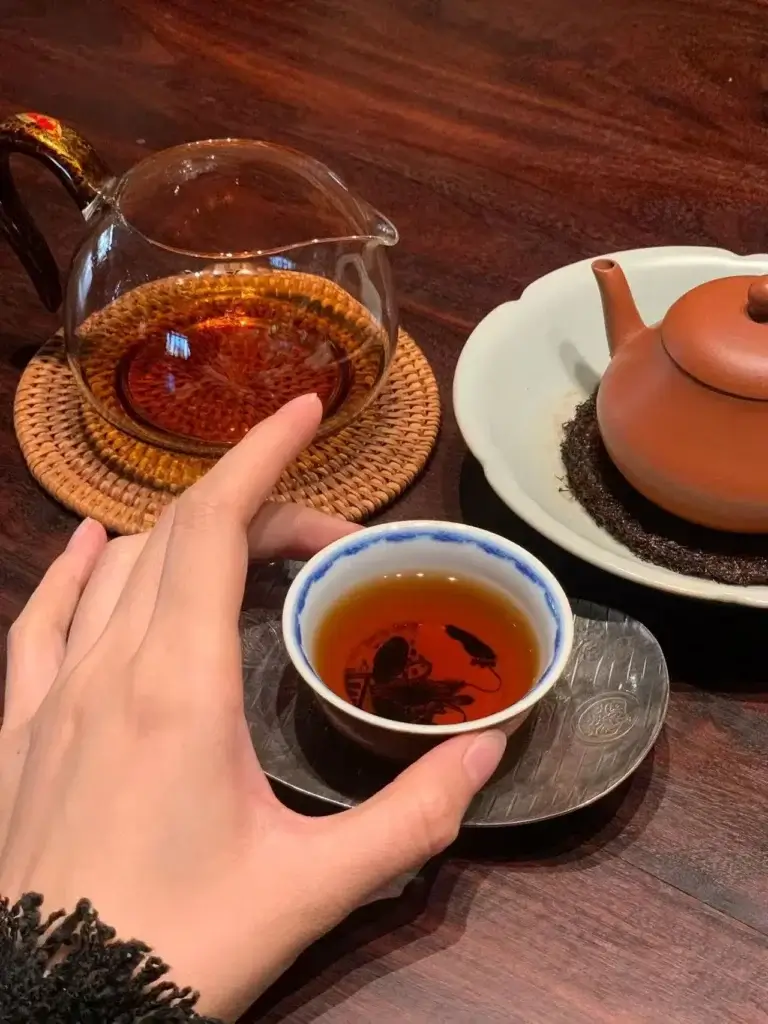
When your fingers gently wrap around this handmade Chinese porcelain teacup, and the warmth of hot tea seeps slowly into your palm, you are holding far more than a simple vessel. You are holding the mist of mountain mornings, the glow of a thousand kiln fires, and the quiet, worn time of an artisan’s hands—all condensed into these soft, smooth curves. One touch, and your heart warms instantly. This is not just an object. Wrapped in earth and fire, it reads like a quiet love letter. A thousand-year-old sigh lingers within its clay walls, turning every sip into a soft dialogue with time itself.
The Clay of a Handmade Chinese Porcelain Teacup: Finding Clay That Breathes
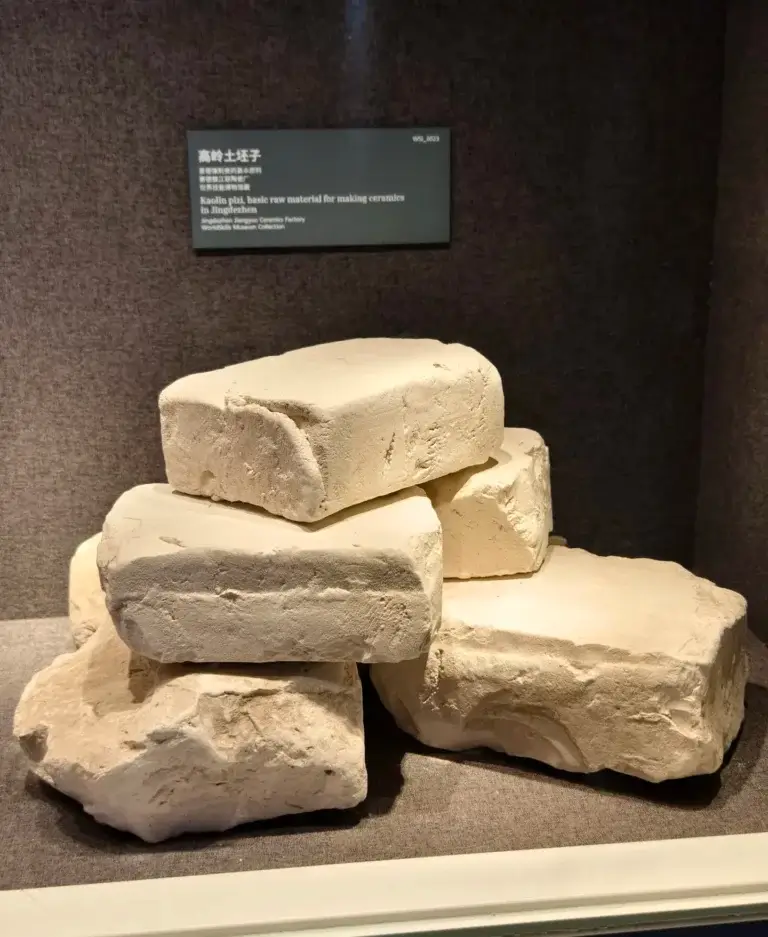
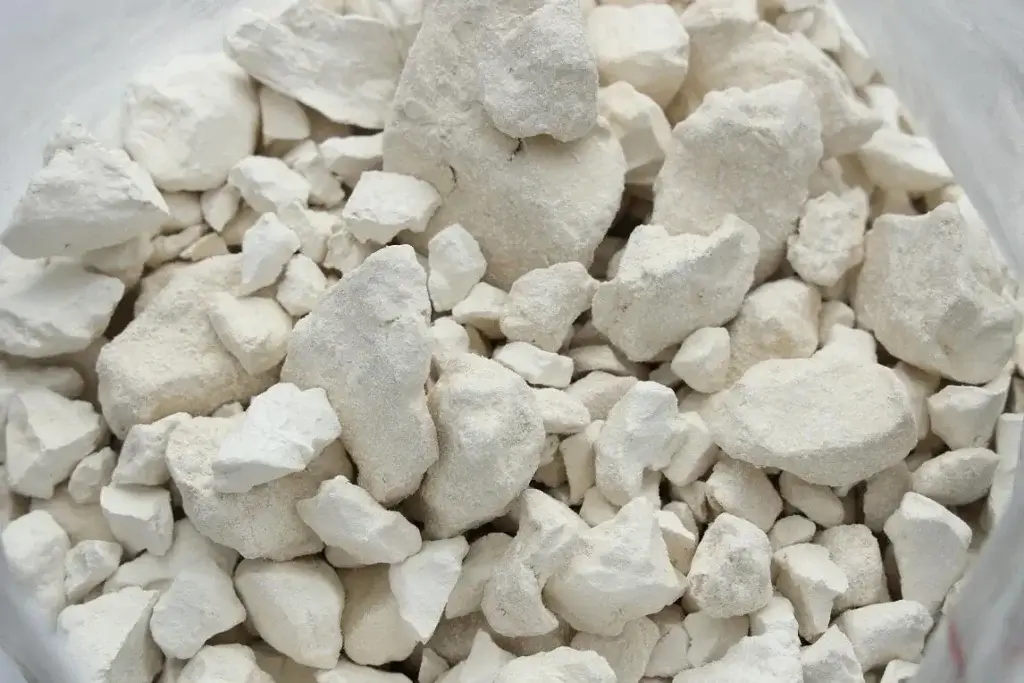
To begin with, our story starts in the fog-shrouded hills of Jingdezhen, where kaolin clay rests deep within the rock, white as fresh snow, fine as moonlight. Forged over hundreds of millions of years, this is no ordinary mud—it is the very soul of porcelain, a spirit that can glow bright within fire.
Artisans kneel in the earth, sifting carefully with their fingertips, removing every grain of sand and fleck of iron. They know that even the tiniest impurity will leave a permanent mark on the finished glaze. Back in the workshop, they wash, knead, press, and fold the clay again and again, like soft clouds being gently shaped. Only when all air is pressed out, and the clay yields like a lover’s breath, does the work truly begin. This is the first promise: to turn the tenderness of the earth into something strong enough to withstand fire.
Shaping a Handmade Chinese Porcelain Teacup: Heartbeat on the Wheel
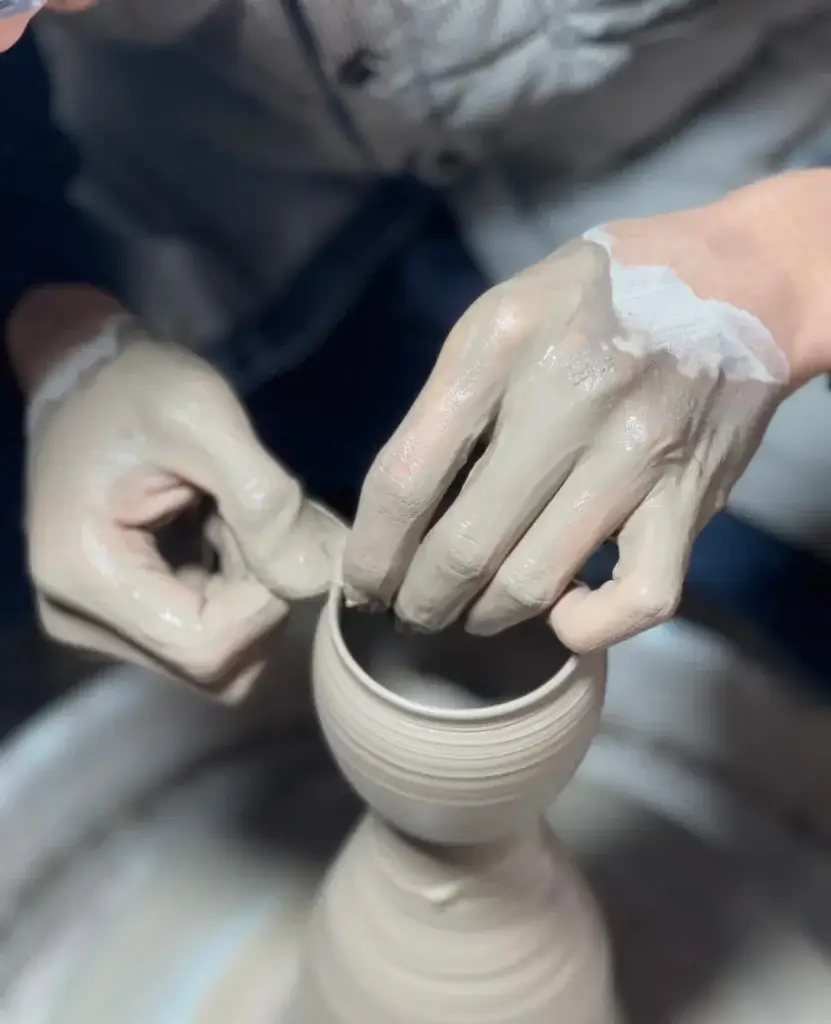
The potter’s wheel hums to life, a quiet ancient song. Artisans center the clay, keeping it steady and calm. The artisan leans in, presses a thumb gently into the center, and lifts the clay slowly upward with careful fingers. The artisan shapes the cup’s body—its curves holding the weight of the artisan’s wrist, the rhythm of their breath, and all their quiet focus in that moment.
In fact, no two cups are ever identical. A slight unevenness on the rim, a fuller belly on one side—these “imperfections” are the artisan’s fingerprint, a silent mark that says: I held you, I made you. Additionally, for more delicate shapes, molds may be used, but every finishing touch remains handmade. The artisan smooths the rim soft as flower petals; shapes the base steady as home; carves fine lines to catch the light and dance. In this moment, the clay comes alive, gaining human warmth and a unique, irreplaceable soul.
The First Firing: Hardening a Dream
The shaped cup must wait patiently in the shade, drying slowly for days. However, there is no rushing. Hurry will crack the body and break the dream. The artisan touches it occasionally, feeling moisture fade away, like watching a child grow quietly.
At last, it enters the kiln for its first fire. Bisque firing gently hardens the soft clay into a porous, matte body, strong enough for the work ahead. The fire burns away the last traces of water and organic matter, turning raw earth into a clean, blank canvas. When the kiln opens, the biscuit body glows softly, as if a child is waking up, innocent and ready to be painted.
Brushstrokes of Love: Painting Myth Into the Clay
Now, the painter breathes life into the cup.
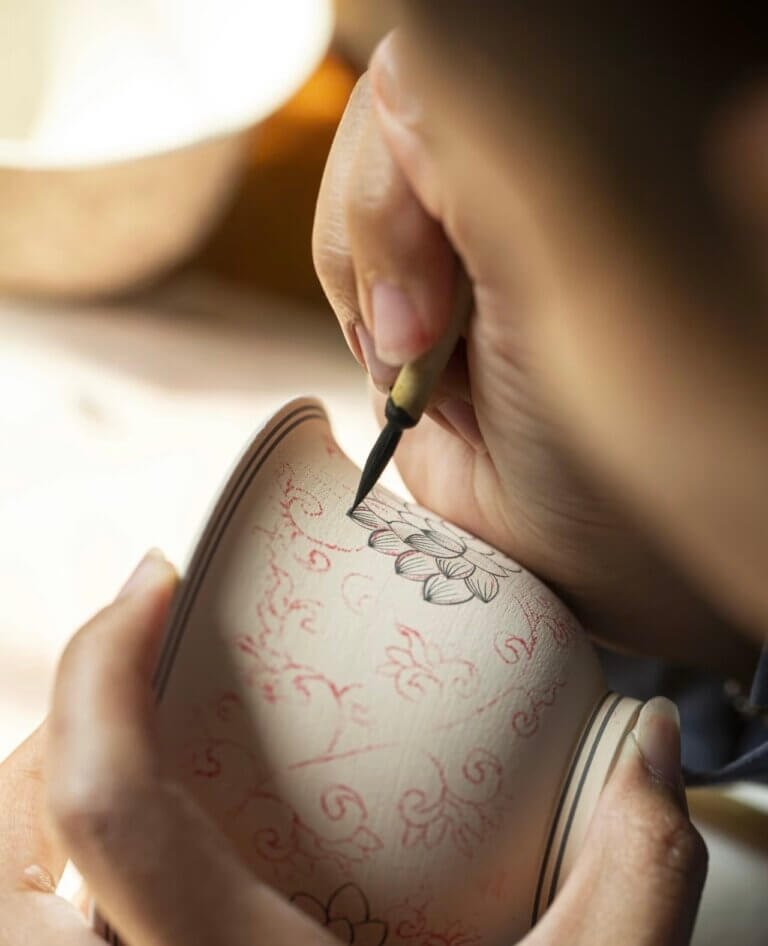
With the finest brushes, they dip into mineral pigments—crimson from cinnabar, deep blue from cobalt, gentle green from malachite. These colors come from the earth itself. Every stroke is slow and intentional: dragon claws curve like wind, peony petals unfold like a soft kiss, mountain mist drifts like quiet longing. There are no stencils, no shortcuts. One wrong mark, and weeks of work are lost.
Yet it is this care that makes each cup one of a kind. In one, a dragon’s eye holds light; in another, a peony carries dewdrops. The painter weaves their stories, their memories, their quiet hopes into every line. What you see later in the glaze are the words they never spoke aloud.
Every handmade Chinese porcelain teacup carries the painter’s unspoken stories, woven into every brushstroke and fired into its very soul.
The Glaze: Wrapping the Cup in Moonlight
Once the paint dries, the artisan dips the cup into a pool of smooth, milky glaze. It clings thin as mist, light as wind. What’s more, a clear glaze lets the paintings shine through; celadon wraps it in warm jade; crackle glaze weaves fine lines that tell the story of time.
This glaze is both protection and tenderness. The glaze seals the porous body, making it waterproof and safe for tea, while preserving the painted stories so they may glow for years. It is a veil made of moonlight, turning the cup into something truly precious.
Final Fire: Alchemy at 1300°C
The last step is a journey through fire, to be reborn.
The kiln door closes. Temperature rises slowly—1000°C, 1200°C, finally reaching 1300°C, hot enough to melt stone. Inside, the clay vitrifies, becoming translucent and strong; the glaze melts into a glassy skin and bonds permanently to the cup’s body.
In wood-fired kilns, ash floats onto the cups, leaving golden streaks—fire’s kiss, unrepeatable and unique. Artisans watch through small peepholes, hearts racing. If the heat climbs too high, the cup will melt into a shapeless puddle. Should the temperature drop too low, the glaze will lose its luminous glow. This high-stakes gamble puts weeks of devotion on the line, all for a fiery rebirth.
When the kiln finally opens, some cups are broken, some warped. Only a few emerge perfect, glowing with color, kissed by fire. They are the winners, chosen by earth and flame.

The Final Touch: Delivered to Your Hands
Before it reaches you, artisans give the cup one final inspection.
Artisans run their fingers over every inch. The rim must be soft enough to kiss; the base steady enough to stand; the glaze bright enough to reflect light; every brushstroke clear as if just painted. Even a pinprick bubble means the cup is broken and returned to earth. Artisans believe only the very best deserves to reach someone who will truly understand.
The chosen cup is cleaned, stamped with the maker’s mark—a quiet signature, a promise: I made this for you. Artisans wrap it carefully in soft paper, then it travels over mountains and oceans, finally arriving at your tea table.
Why This Cup Deserves Your Gentle Care
In contrast, we live in a world that values speed over care. We use disposable cups, drink fast tea, and live hurried lives. But this cup stands apart from mass-produced wares. Crafted with unrushed care, it holds a quiet slowness. Infused with the artisan’s patience, it exudes a soft gentleness. It took weeks to come from the earth to you.
When you hold it, feel its warmth, and notice the delicate brushstrokes, you will understand: this is not just a cup. It is tenderness made by hand, heart, and time. It reminds you to slow down, to feel the warmth of the earth, to see the light of fire, and to sip tea as time gently holds you.
So next time you lift this cup to your lips, please take your time. Smell the tea. Touch the glaze. Listen to the story hidden within. It is the song of the earth, the poetry of fire, and the quiet message from the artisan:
I gave you my time.
FAQ
Q: How long does it take to make one handmade cup?
A: From clay to your hands, at least 2 to 4 weeks. For detailed designs, it can take months. Beauty cannot be rushed.
Q: It looks thin. Is it fragile?
A: Though it appears delicate, it is surprisingly strong. Fired at over 1300°C, it becomes tough and durable. It will accompany you for many years if treated gently.
Q: Can I use microwave or dishwasher?
A:It is safe, but hand-washing is always better. Treat it like a precious gift, with warm water and soft cloth, so its gentle beauty never fades.
Q: What makes Chinese porcelain so special?
A: It is alive. It carries the breath of the earth, the warmth of fire, and the heartbeat of the artisan. It is not a cold product—it is a piece of warm time you can hold in your hands.
Conclusion
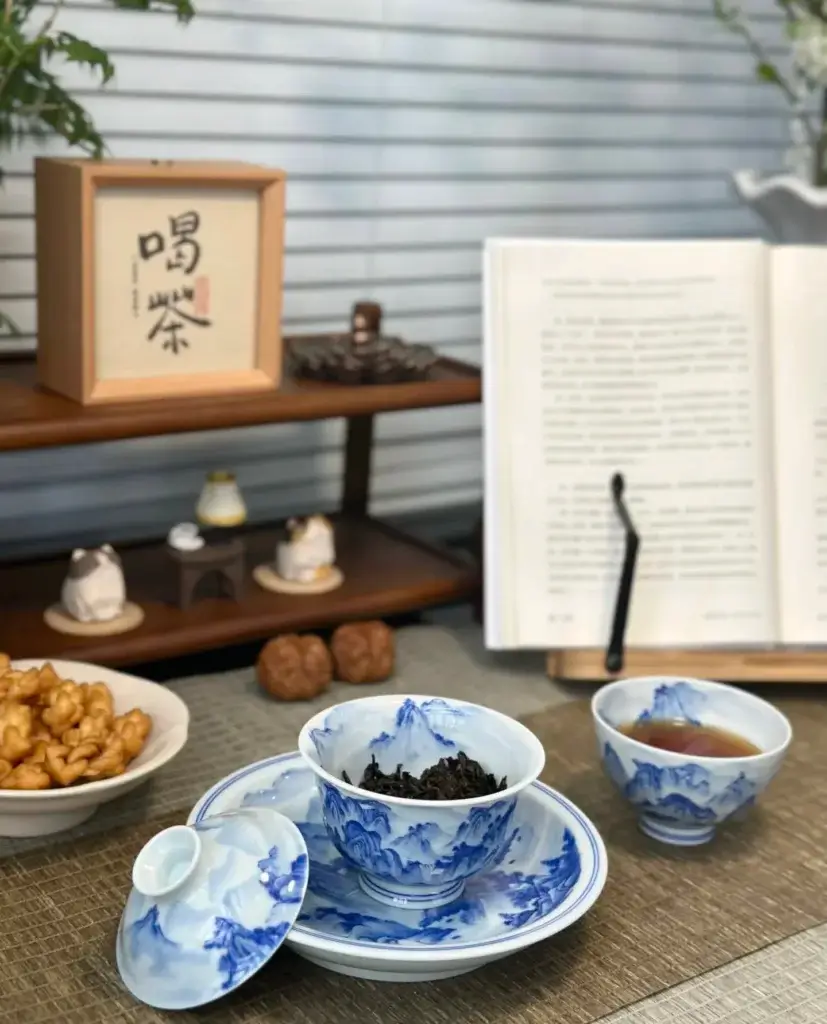
This handmade Chinese porcelain teacup is more than a vessel—it’s a quiet conversation between earth, fire, and human hands. If you’re drawn to the slow, intentional craft of porcelain, you might also love exploring how a simple teacup can become a moment of calm in busy days, or how to spot the timeless artistry in everyday tea ware.
- Alone Time, Reimagined: How a Porcelain Teacup Slows Down Your Busy Days
- Handcrafted Tea Ware: The Art of Everyday Elegance
Each piece carries the same care and story—crafted to turn a simple sip of tea into something meaningful.