St. Patrick’s Day; Up to 30% OFF Everything!

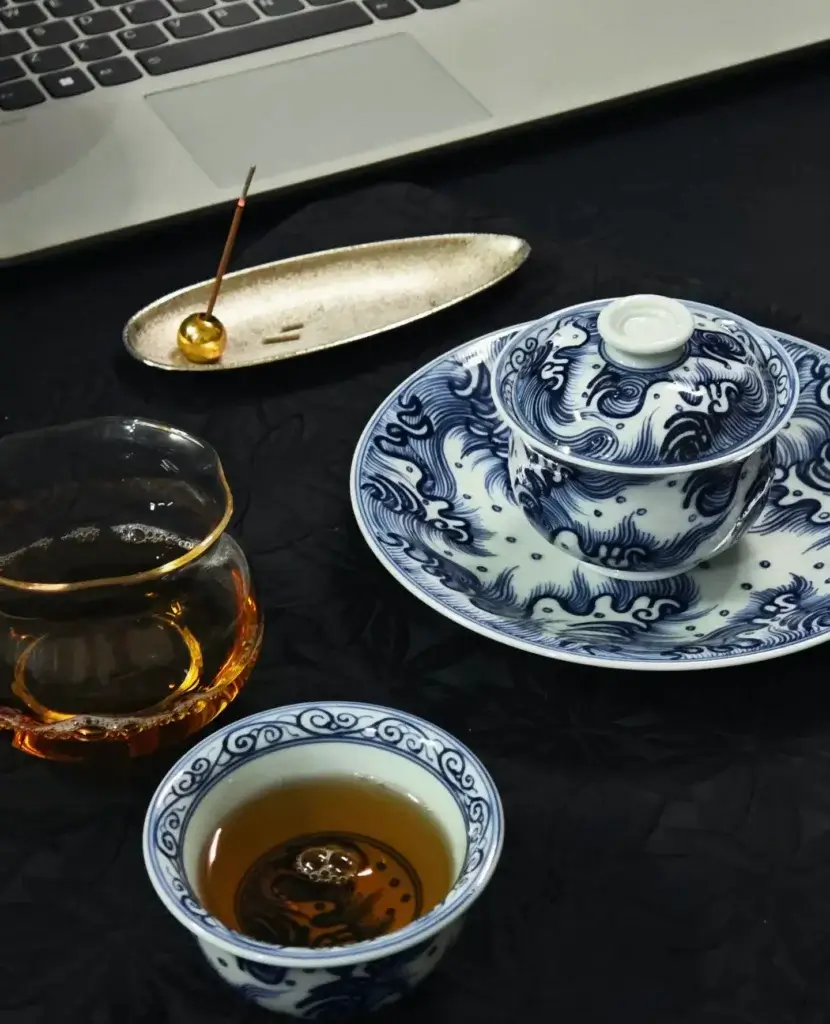
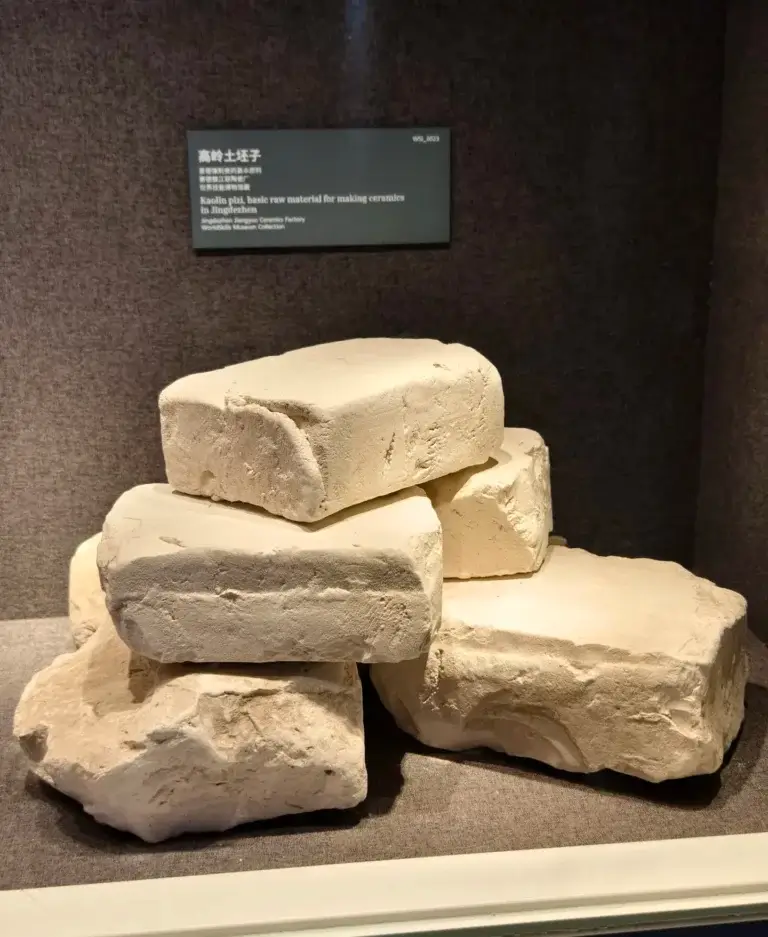
Amid the millennium-old kiln fires of Jingdezhen, every piece of handmade porcelain carries the unique soul of its artisan, while industrial porcelain is merely a cold replica. This guide explores the core differences between handmade vs industrial porcelain, covering painting techniques, firing processes, and practical identification methods.
In today’s porcelain market, a fine hand-painted porcelain piece often costs dozens or even hundreds of times more than industrial porcelain. Whether you are a porcelain collector, a seasoned tea art enthusiast, or simply looking for a favorite daily-use porcelain item, learning to distinguish between handmade and industrial porcelain can help you avoid pitfalls and select truly high-quality pieces.
The key to porcelain identification lies in understanding the fundamental differences in their manufacturing processes—from painting techniques to firing procedures, every step leaves a unique “fingerprint” waiting to be discovered.
Fundamental Differences in Painting Techniques : handmade vs industrial porcelain
The decorative techniques on the surface of porcelain are mainly divided into three categories: hand-painting, decal application, and screen printing. Each has distinct characteristics that set handmade and industrial pieces apart.
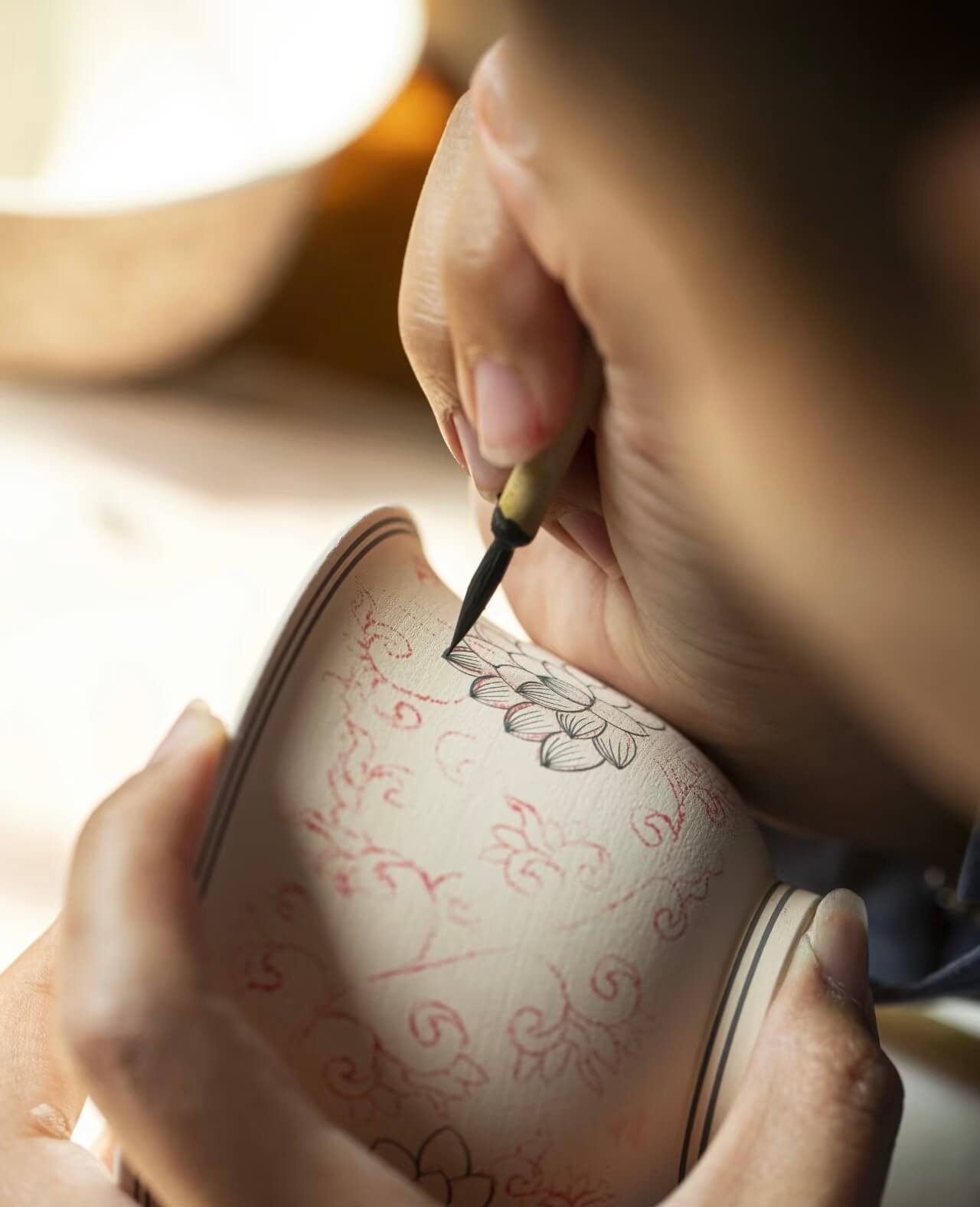
Hand-Painting: The Mark of the Artisan
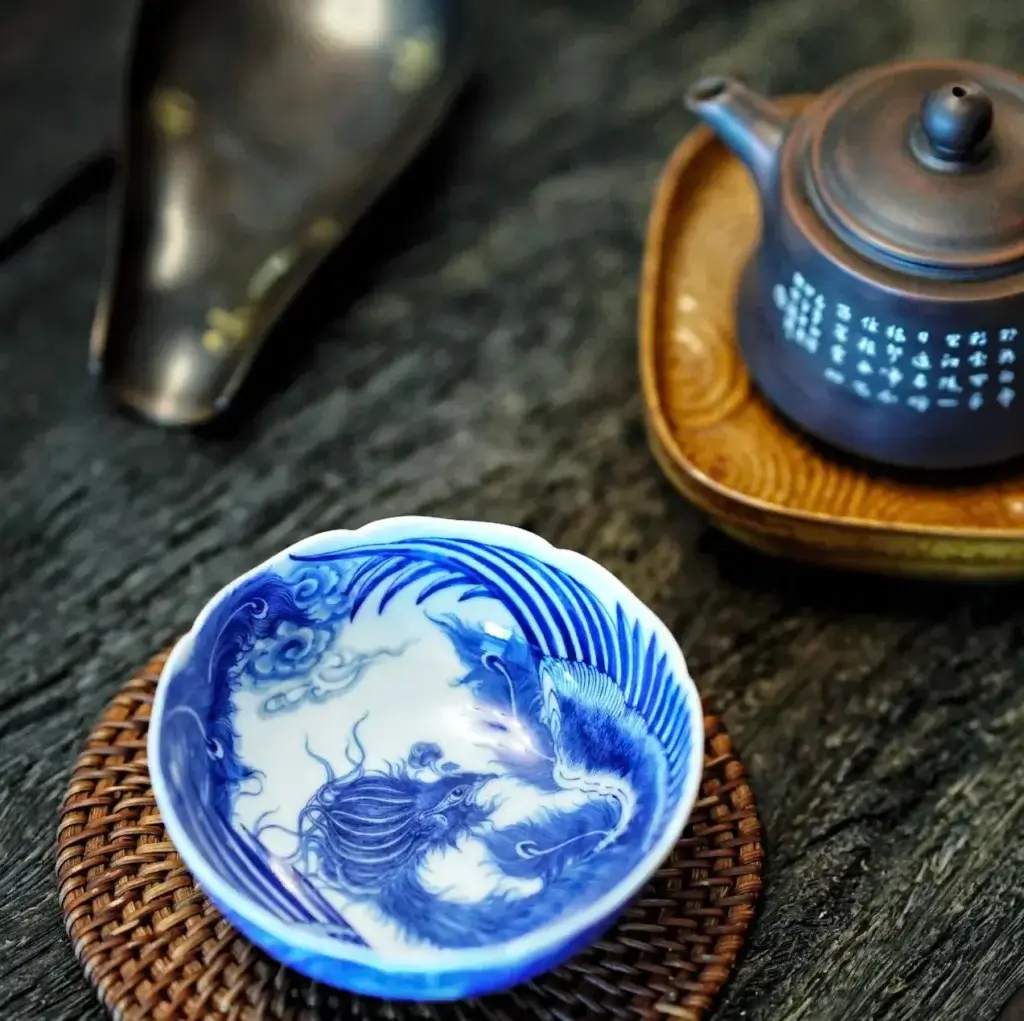
Hand-painting refers to craftsmen directly using brushes to apply pigments and create stroke by stroke on the porcelain surface. The most core feature of this technique is that each piece is one-of-a-kind.
When examining hand-painted porcelain, look for natural and smooth brushstrokes. Lines vary from thick to thin, colors blend softly, and transitions are gentle. Even for the same pattern, you will find slight differences across various utensils—this is the unique signature of the artisan.To see these exquisite hand-painted details in person and bring home a signature piece crafted by skilled artisans, browse our curated collection of hand-painted porcelain today.
Decal Application: Mass-Produced Precision
Decal application involves first transferring the pattern onto decal paper and then pasting it onto the porcelain surface. This method is widely used in industrial production because it is fast and efficient.
The patterns created by decals are rigid and perfectly consistent. They look clean and uniform, but they lack the vitality and texture of hand-painted works. Decal porcelain is easy to identify because every piece looks exactly the same.
Screen Printing: Industrial Uniformity
Screen printing is a more advanced industrial technique. It uses a mesh screen to transfer patterns onto the porcelain surface through a printing process.
Like decals, screen-printed porcelain has highly uniform patterns. The design looks sharp and clear, but it does not have the organic, handcrafted feel that makes handmade porcelain special.
Differences in Firing Processes : handmade vs industrial porcelain
The firing process is another key factor that distinguishes handmade porcelain from industrial porcelain.
Handmade Porcelain: Fired in Traditional Kilns
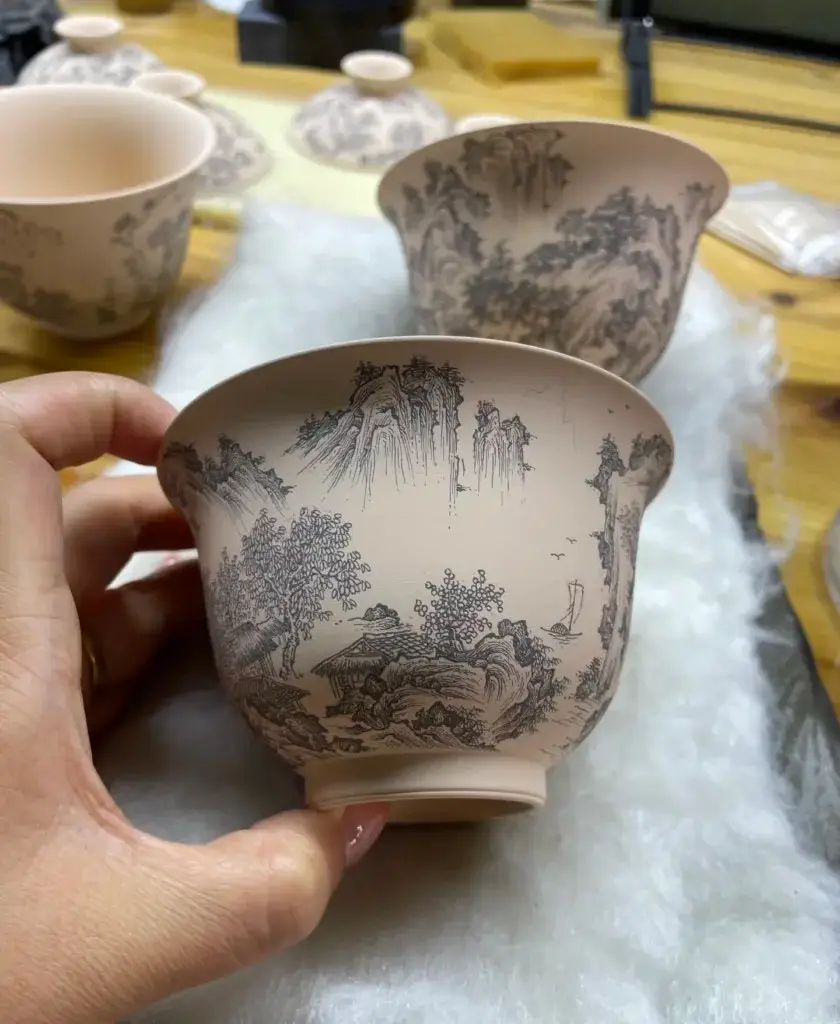
Handmade porcelain is usually fired at high temperatures (1200–1300°C) in a traditional wood-fired kiln. The firing process is affected by many variables: the burning speed of the wood, the rate of temperature rise, and the position of the porcelain in the kiln.
These small differences cause slight variations in color, texture, and glaze across individual pieces. This uniqueness is what gives handmade porcelain its warmth and artistic value.
Industrial Porcelain: Fired in Automated Kilns
Industrial porcelain is fired in modern electric or gas kilns that maintain a constant temperature. The process is fully automated and tightly controlled.
As a result, every piece of industrial porcelain has the same color, texture, and finish. While the consistency is reliable, it lacks the subtle, natural variations that make handmade porcelain feel alive.
How to Identify Handmade Porcelain : spot handmade porcelain
Identifying handmade porcelain is easier than you might think. Here are three practical methods you can use every time you shop.
Observe the Pattern Details
Hand-painted patterns often have slight irregularities: uneven lines, subtle color differences, or natural variations. These “flaws” are actually signs of craftsmanship.To see these details in person, browse our selection of premium hand-painted porcelain pieces.
Industrial porcelain, by contrast, has perfectly uniform patterns with no visible differences. The design looks “printed” and lacks organic movement.
Check the Bottom Mark
Handmade porcelain often bears marks from the artisan or the workshop. These marks are usually hand-stamped or applied with care.
Industrial porcelain typically has a standardized, machine-made factory logo or brand mark.
Feel the Texture
Handmade porcelain often has a more delicate, smooth, and warm texture. The glaze feels soft to the touch and has a subtle richness.
Industrial porcelain may feel slightly harder, colder, or less refined. It can also have a more “mechanical” finish.
Why It Matters: Value, Culture, and Enjoyment : handmade porcelain value
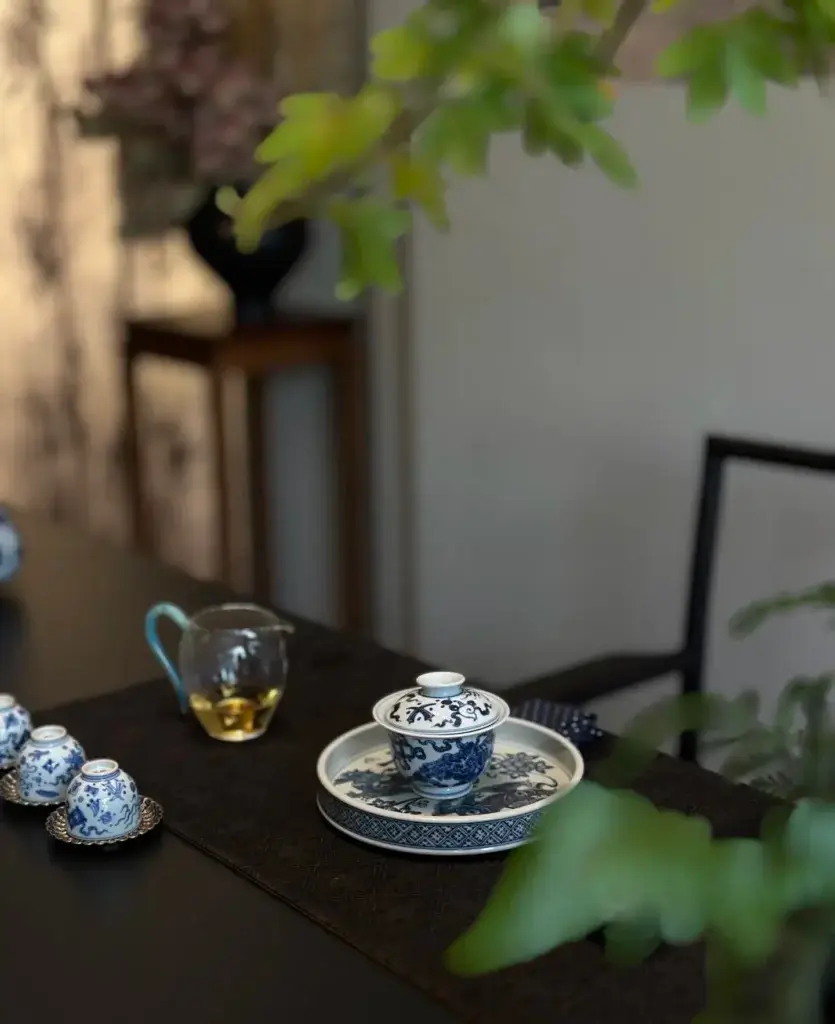
Handmade porcelain is not just a tableware item. It is a carrier of Chinese ceramic culture, crafted with centuries of tradition and skilled labor.
Industrial porcelain serves its purpose and is affordable, but it cannot replicate the soul, the story, or the artistry of a piece made by hand.
Whether you are collecting, gifting, or using porcelain for daily tea, understanding the difference allows you to choose with confidence and appreciate the true value of craftsmanship.
FAQ (Frequently Asked Questions)
Q: Is hand-painted porcelain always more expensive?
A: Generally yes, because hand-painting is labor-intensive and requires skilled artisans.
Q: Can decal porcelain look high-end?
A: Yes, but it lacks the uniqueness and texture of hand-painted pieces.
Q: How do I know if a porcelain piece is truly handmade?
A: Check for slight variations in patterns, artisan marks on the bottom, and a warm, natural texture.
Q: Does handmade porcelain have flaws?
A: Small, natural variations are a sign of authenticity, not defects.
Call to Action
Next time you shop for porcelain, take a moment to look closely. By learning to identify hand-painted vs. industrial pieces, you can make better choices, avoid overpaying, and bring home pieces with real character and value.
If you’re ready to start your tea journey with a high-quality handmade gaiwan, be sure to check out our detailed guide on How to Choose the Perfect Gaiwan for Beginners. It breaks down the top 3 gaiwans perfect for new tea enthusiasts.